Follow‑Up Briefing on Europe’s Defence Readiness Roadmap 2030
The European Commission and the High Representative have released the Defence Readiness Roadmap 2030, translating the spring White Paper into concrete objectives, dated milestones, and measurable indicators. The package accelerates EU‑wide capability development through Member State “Capability Coalitions,” launches pan‑European Readiness Flagships (Drone Defence, Eastern Flank Watch, European Air Shield, and European Space Shield), and ties defence industrial scale‑up to new EU financial instruments and regulatory simplification. For primes, tier‑suppliers, and dual‑use tech actors in Germany and across the EU, the Roadmap creates an immediate contracting horizon through 2030, with pronounced opportunities in air and missile defence, drones and counter‑drone, space resilience, cyber/AI/EW, artillery/missiles, military mobility, and strategic enablers. It also brings a sharper focus on joint procurement, interoperability, and “invest European” imperatives.
What’s New Since the White Paper
The Roadmap operationalises the White Paper’s strategic intent with:
- Dated milestones for closing capability shortfalls by 2030, including the launch of projects across all priority areas by the first half of 2026 and receipt of SAFE‑funded procurements by end‑2030.
- A governance model via Capability Coalitions, with lead/co‑lead nations, implementation plans, and linkage to EDA/EUMS processes. Member States are to report by early 2026.
- An Annual Defence Readiness Report for each October European Council, tracking progress and providing political steer.
- A flagship architecture oriented to urgent pan‑EU threats and full NATO interoperability.
For industry, the practical consequence is a compressed timetable to align portfolios, consortia, certifications, and production capacity to the Roadmap’s procurement cadence – particularly where German industry can anchor coalition leadership or co‑leadership.
Readiness Flagships: Immediate Focus Areas
The flagship layer concentrates demand, funding, and political urgency. Four projects will structure European procurement and integration over the next five years:
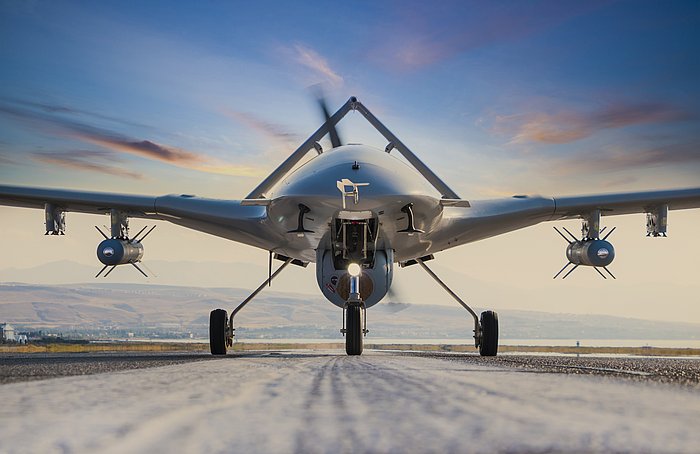
- European Drone Defence Initiative. A multi‑layered, interoperable counter‑UAS network for detection, tracking, neutralisation, and precision strike, drawing lessons from Ukraine and enabling dual‑use border and infrastructure protection. Expect early calls tied to rapid production scaling and common procurement.
- Eastern Flank Watch. An integrated border defence posture across land, air, and sea on the EU’s Eastern border, combining air defence and counter‑drone with ground systems, maritime security in the Baltic/Black Seas, situational awareness, and internal security/border management. Alignment with NATO plans and EU maritime security constructs is explicit.
- European Air Shield. An integrated, multi‑layer air and missile defence architecture fully interoperable with NATO C2, with sensors and effector layers spanning the full threat spectrum. Work programmes in EU funding streams will prioritise Air & Missile Defence actions.
- European Space Shield. A defence‑oriented layer to protect and ensure resilience of European space assets and services, building on EU space systems and national capabilities. Priorities include Galileo‑enabled equipment, Space Domain Awareness, counter‑jamming/spoofing, and in‑space operations/services.
Each flagship carries near‑term milestones for endorsement, launch, initial capacity, and full functionality between 2026 and 2028, creating a predictable pipeline for design, prototyping, certification, deployment, and scale‑up.
Capability Coalitions: From Fragmentation to Joint Procurement
The Roadmap directs Member States to complete Capability Coalitions in all priority areas, assign leads, and adopt implementation plans through 2030. Key targets include:
- Convergence toward at least 35% collaborative procurement and 55 % of investment sourced from the European defence industrial base.
- Project launches in all priority areas within H1 2026.
- Contracts and financing in place by end‑2028 to close critical shortfalls; SAFE‑funded procurements received by end‑2030.
For German defence actors, the coalition model favours early positioning as lead/co‑lead and use of structures such as EDPCI/SEAP to enable EU co‑funding and streamlined governance. Aggregation of demand reduces price pressure and favours interoperable, scalable European solutions.
Industrial Scale‑Up and Innovation: A Compressed Window
The Roadmap links capability delivery to an accelerated expansion of Europe’s production base and tech adoption:
- Strategic dialogues with industry scale up in 2026; the first annual Defence Industrial Summit by mid‑2026.
- Focused industrial capacity mapping starts with air/missile defence, drones/counter‑drone, and space systems from mid‑2026.
- A European Defence Transformation Roadmap will drive faster testing, embedding of disruptive tech, and risk‑tolerant procurement, with special emphasis on AI‑enabled systems, secured European cloud/C2, and dual‑use pathways.
- Skills and supply chains are explicit constraints: reskilling targets reach 600,000 by 2030; critical raw materials risks will be mapped with mitigating actions from 2026.
This is a signal to lock in multi‑year framework agreements, secure sub‑tier inputs, and invest in lines that can surge. The Commission is readying competition and potential State aid guidance tailored to defence collaboration.
Financing and Regulatory Enablers
The financing stack and market rules are being refitted to defence readiness:
- SAFE is fully subscribed and will be key to pre‑financing and receiving procurements through 2030, including for flagship projects.
- The next MFF contemplates substantial budget increases for defence and space, including a defence window in a European Competitiveness Fund, expanded dual‑use eligibility under the future Horizon Europe Framework Programme, and a larger Military Mobility envelope.
- A proposed up to EUR 1 billion Fund‑of‑Funds via EIB/EIF targets defence scale‑ups by Q1 2026, complemented by broader EIB Group financing for defence‑related infrastructure and technologies.
- The Defence Readiness Omnibus and a “mini‑omnibus” aim to streamline procurement, intra‑EU transfers, security of supply, standards, and certification. A forthcoming Military Mobility package will harmonise rules and invest along priority corridors, crucial for Eastern deployments and dual‑use infrastructure.
For contractors and investors, this is a strong prompt to align financing structures, ESG positioning, and eligibility to EU instruments with accelerated calls and simplified procedures.
Ukraine Integration and the “Steel Porcupine” Concept
Ukraine is embedded in the Roadmap as Europe’s first line of defence and an innovation partner:
- A “reparation loan” mechanism would provide multi‑year finance, anchored to immobilised Russian asset cash balances, sustaining predictable equipment flows sourced predominantly from EU and Ukrainian industry.
- A Drone Alliance with Ukraine will catalyse joint ventures, co‑production, and rapid iteration based on battlefield feedback.
- Inclusion of Ukraine in capability coalitions, targeted support instruments, and training through EUMAM underscores interoperability and industrial integration.
- Progress indicators track EU military support volumes, ammunition delivery, defence‑industry JV formation, and EU27 investment into the Ukrainian defence tech‑industrial base.
German industry should anticipate JV structuring, tech‑transfer governance, and export control alignment tailored to Ukraine‑EU integration and coalition participation.
Practical Implications for German and EU Aerospace & Defence
The Roadmap materially shifts the procurement landscape:
- Accelerated timelines and joint procurement favour mature, interoperable solutions with clear European supply chains, certification pathways, and lifecycle support anchored in the EU.
- Flagships will prioritise multi‑sensor integration, C2/C3 interoperability with NATO, resilient comms, and layered defence architectures – opportunities for primes and system integrators, and for SMEs in sensors, EW, propulsion, autonomy, edge AI, secure cloud, and test/validation.
- Space and drone ecosystems are immediate growth vectors, with dual‑use bridges to border protection and critical infrastructure security – relevant for German aerospace, avionics, ISR, SATCOM, PNT, and ground segment providers.
- Military mobility creates civil‑mil infra opportunities for logistics, rail/port/airfield upgrades, and heavy lift – advantageous for German engineering, mobility, and infrastructure consortia.
Companies should rapidly align product roadmaps to the 2026 launch milestones, structure consortia for coalition priority projects, and secure positions in flagship work programmes.
What Companies Need to Do Now
Europe’s defence readiness push creates a time‑bound window for positioning. Actions taken in the next 6-12 months will determine access to programmes running through 2030. Crucially, there are substantial opportunities for companies that have not historically focused on defence – including players in automotive, electronics, robotics, cloud and cybersecurity, telecoms, space, semiconductors, advanced materials, construction, transport and logistics, and critical‑infrastructure services. Dual‑use offerings and rapid adaptation of civil technologies are explicitly encouraged.
- Map offerings to Flagships and Coalitions. Identify where your products and technologies fit the European Drone Defence, Eastern Flank Watch, European Air Shield, and European Space Shield, as well as coalition priority areas (e. g., air and missile defence, drones/counter‑drone, military mobility, cyber/AI/EW, space systems). Build a gap‑to‑fit matrix against 2026-2028 milestones.
- Form or join consortia early. Engage primes, system integrators, and Member State leads/co‑leads to secure roles in joint procurement projects. Prioritise interoperable, EU‑anchored supply chains and prepare governance for EDPCI/SEAP‑type structures.
- Validate certifications and compliance. Plan for defence‑grade QA and security (e. g., EN 9100/AS 9100 where applicable, cyber resilience consistent with EU frameworks), facility clearances, export‑control compliance, and evidence of security of supply and traceability. Non‑defence entrants should define “defence variants” of products with appropriate documentation and hardening.
- Align financing to EU instruments. Build bankable project packages that can leverage SAFE pre‑financing, EDIP/EDF work programmes, cohesion re‑programming for dual‑use, Military Mobility envelopes, and EIB/EIF products. Ensure ESG and eligibility positioning for defence‑related financing.
- Secure critical supply chains and talent. Lock in multi‑year sub‑tier capacity, second‑source critical inputs, and implement critical raw‑materials risk management. Launch reskilling and hiring plans aligned to the EU’s 2030 skills targets, including apprenticeships and partnerships with vocational institutions.
- Prepare for accelerated procurement. Adapt to simplified, joint EU procurement and reporting. Standardise documentation, pricing, and warranties for collaborative buys; ensure readiness for rapid down‑selects and framework agreements by 2026.
- Develop dual‑use and civil‑security pathways. For non‑defence companies, pilot deployments with border protection, civil protection, and critical‑infrastructure operators can validate technology and accelerate transition to defence use cases.
- Set a dated capture plan. Define opportunity pipelines, teaming, proposal calendars, and investment decisions mapped to the Roadmap’s milestones (endorsements in 2025, launches and first calls in H1 2026, full functionality 2027-2028, deliveries to 2030). Coordinate with national authorities in Germany and relevant EU bodies to align programmes and approvals.
How HEUKING Can Support
HEUKING advises across the full spectrum of EU defence readiness implementation:
- Strategy and market entry aligned to Coalition priorities and flagship timelines, including positioning for lead/co‑lead roles.
- Procurement, consortium, and funding structuring across SAFE, EDIP/EDPCI/SEAP, EDF, Cohesion Funds, Military Mobility, EIB/EIF products, and national co‑financing.
- Regulatory simplification pathways under the Omnibus, security of supply, intra‑EU transfers, standards/certification, competition law, and State aid compliance.
- Industrial scale‑up and M&A for capacity expansion, critical supply chain de‑risking, and JV frameworks with Ukrainian partners.
- Dual‑use and export control (EU/Germany), cyber/AI governance, IP protection, and data/space regulatory interfaces.
We recommend immediate internal alignment of capability offerings to the flagship and coalition matrices, rehearsal of consortium and governance models, and early engagement with German and EU authorities to synchronise national planning with the Roadmap’s dated milestones.
Key Dates at a Glance
- End‑2025: Endorsement of Readiness Flagships; adoption of Defence Readiness Omnibus and mini‑omnibus; adoption of EDIP and the European Defence Transformation Roadmap; establishment of Tech Alliances for Defence.
- Q1-Q2 2026: Launch of Capability Coalition projects across priority areas; first SAFE/EDIP calls for production scaling and common procurement; launch of Drone Defence and Eastern Flank Watch; first Defence Industrial Summit by mid‑2026.
- End‑2026 to End‑2028: Initial capacities for flagships in 2026; Air Shield and Space Shield launched in 2026; European Drone Defence fully functional by 2027; Eastern Flank Watch functional by 2028; contracts/financing in place by 2028 to close critical shortfalls.
- End‑2030: Receipt of SAFE‑funded procurements and closure of prioritised capability gaps.